
Abstract: Aescin is a mixture of phytochemical compounds classified as triterpenoid saponins. It has a well-documented history of use in treating chronic venous insufficiency, where it helps reduce pain and oedema. However, its potential use in cosmetic formulations has not yet been explored in detail. The aim of this article is to review the general properties and dermal applications of aescin, and to evaluate its role in cosmetic products. It is important to note that aescin in cosmetic formulations may only improve the appearance of the skin or unpleasant sensations (e.g., puffiness, leg heaviness) and cannot treat underlying venous disease.
Činč Ćurić L. Aescin in skin care: Properties, safety and application potential. Cos ACTIVE J. 2025;3:37–42
INTRODUCTION
The name saponins is derived from the Latin word sapo, meaning soap. These compounds produce a rich foam and are used as natural solubilisers and foaming agents in cosmetic products such as shampoos and shower gels. When dissolved in water, saponins form slightly acidic solutions, eliminating the need for additional pH adjustment in cosmetic formulations (1). However, their main disadvantage is their irritant effect generally related to their surfactant properties (1).
Saponins are a diverse group of compounds found in more than 100 plant families (2). They occur in particularly high concentrations in plants such as common soapwort (Saponaria officinalis), Indian soapberry (Sapindus mukorossi), soapbark (Quillaja saponaria) and horse chestnut (Aesculus hippocastanum) (1). Structurally, saponins are classified into two main groups: steroidal and triterpenoid saponins (2). Steroidal saponins are not used in cosmetic products due to potential safety concerns (1).
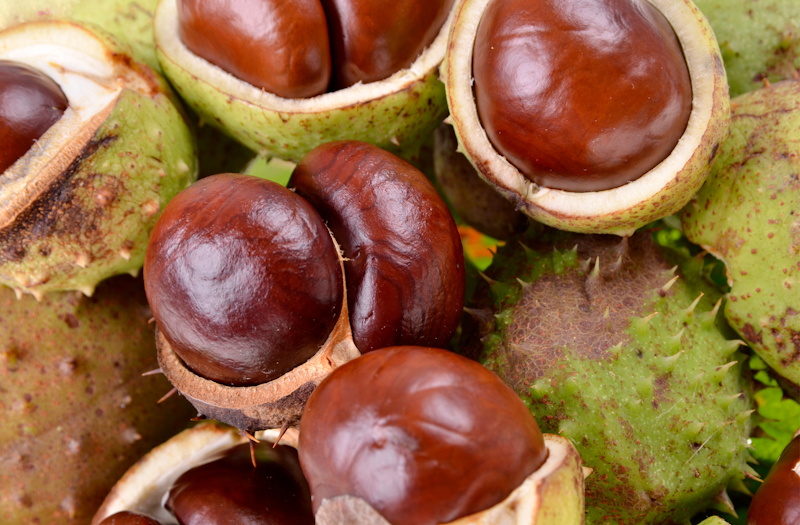
Aescin is a representative compound of the triterpenoid saponins. It is a mixture of saponins primarily found in horse chestnut. Its concentration is highest in the seeds (3–5%), with smaller amounts also present in the leaves, pericarp and bark. Aescin exhibits anti-oedematous, anti-inflammatory and venotonic properties, and has been used for centuries and remains a component of modern medicine (3). It is used for the treatment of haemorrhoids, haematomas, varicose veins, venous congestion and chronic venous insufficiency (1, 4).
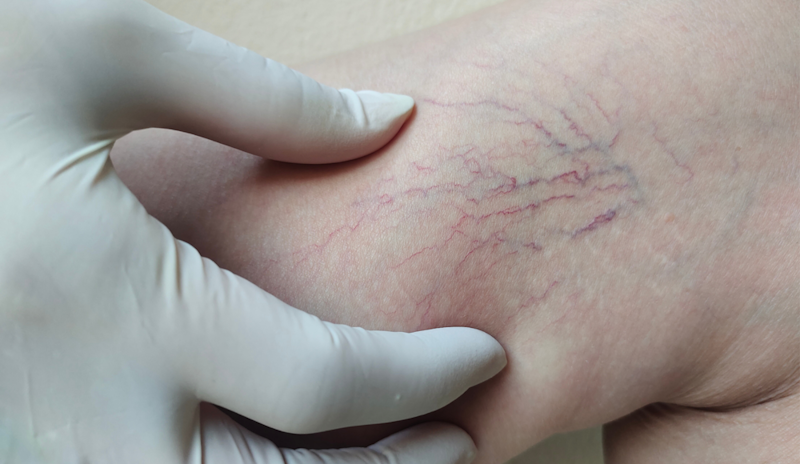
Chronic venous insufficiency involves impaired venous return and increased pressure within the superficial veins, contributing to fluid accumulation in the surrounding tissues (5, 6). This can lead to visible swelling and sensations of heaviness or discomfort in the legs (7). Varicose veins, although medically associated with chronic venous insufficiency, are often perceived primarily as a cosmetic concern due to their visible, superficial dilation (8).
Before we delve deeper into the science of aescin, it is important to emphasise that in cosmetic formulations, the value of aescin lies in addressing the surface-level appearance of the skin and the sensations of uncomfortable feeling of leg heaviness, but not in treating venous disease. Its known biological activities suggest possible benefits such as reducing the appearance of puffiness, alleviating the sensation of heavy legs and supporting skin microcirculation (1, 9).
AESCIN: CHEMISTRY SHAPES PERFORMANCE
Chemistry essentials
Aescin is a mixture of triterpenoid saponins, including β-aescin, α-aescin and crypto-aescin (4). These molecules possess amphiphilic properties, with a hydrophobic region known as the aglycone and a hydrophilic region consisting of sugar chains (Figure 1).
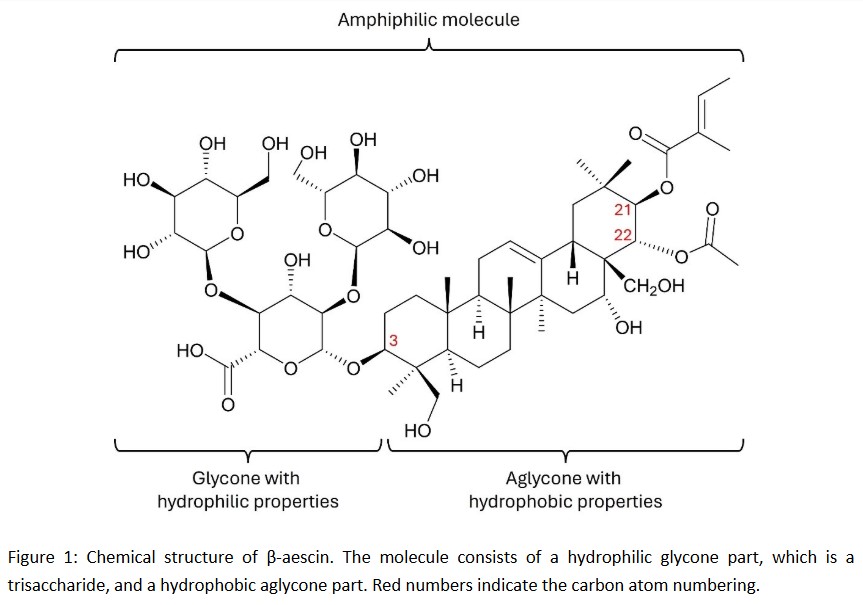
The aglycone has a pentacyclic structure derived mainly from protoescigenin and barringtogenol. The hydrophilic portion is a trisaccharide consisting of glucuronic acid linked to glucose, galactose or xylose. At the C-22 position, the molecule is esterified with acetic acid, while at the C-21 position, it is esterified with either angelic acid or tiglic acid (10).
Formulation-relevant data
Pure β-aescin is poorly soluble in water, but its solubility increases with rising pH and in buffered environments. Dargel et al. determined its pKₐ to be 4.7±0.2, meaning that β-aescin exists primarily in a neutral form below this pH and becomes deprotonated and ionised above it. Ionisation markedly enhances its solubility in water, making the compound more suitable for incorporation into water-based formulations (11). In contrast, β-aescin is highly soluble in organic solvents such as ethanol and methanol, which are therefore frequently used for its extraction (12).
Since the extracts of horse chestnut seeds have been used in home-made preparations for centuries, traditional practices are still very common and popular, although they are not aligned with evidence-based knowledge. For example, many traditional recipes use oil as the extraction solvent. While an oil macerate may contain certain lipophilic constituents such as fatty acids or triglycerides (13), it will not contain aescin or other saponins, as these compounds are poorly soluble in non-polar solvents.
The aescin molecule is thermostable, and its micelles remain stable across a temperature range of 10–40 °C, although micellar structures vary depending on concentration. Furthermore, β-aescin is known to interact strongly with phospholipid model membranes, and at sufficiently high concentrations it can disrupt lipid bilayers (12).
USES OF AESCIN AND HORSE CHESTNUT SEED
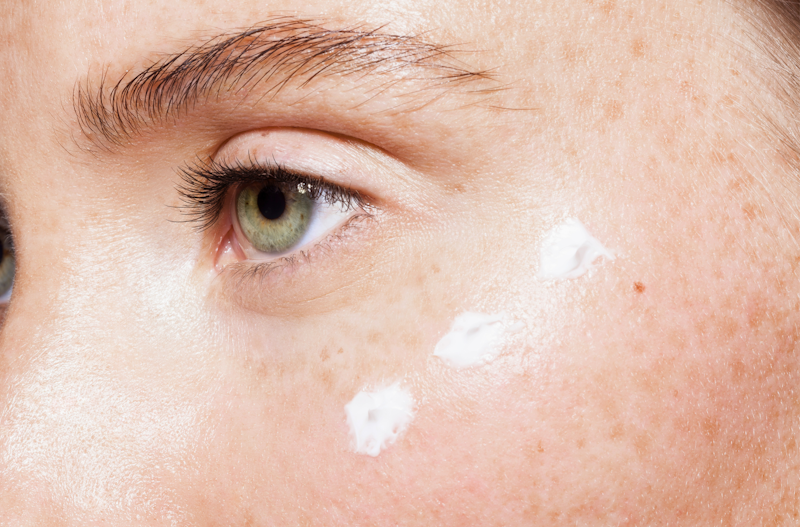
According to CosIng, the European Commission database for information on cosmetic substances, aescin functions as a tonic (14), improving the appearance of the skin and reducing unpleasant sensations. When applied dermally, horse chestnut extract imparts a gentle, soapy texture (9). It can be incorporated into anti-cellulite creams, leg and foot care products, around the eye or puffy eye treatments, hair care products and adjuvant care for poor microcirculation (1).
Orally administered aescin has well-documented benefits in the treatment of chronic venous insufficiency (15). Although its clinical use is beyond the scope of this article, some therapeutic properties, such as improving microcirculation, reducing fluid accumulation and supporting tissue hydration, can be leveraged for cosmetic purposes.
Aescin reduces puffiness and swelling
In vitro studies have shown that aescin inhibits hyaluronidase, the enzyme responsible for degrading hyaluronic acid, an essential component of the extracellular matrix that contributes to water retention, firmness and tissue turgor (5). By inhibiting hyaluronidase, aescin helps preserve hyaluronic acid levels, thereby enhancing the integrity of the endothelial barrier and reducing plasma leakage and oedema formation (4). In cosmetic terms, by preserving hyaluronic acid levels, aescin may support skin hydration balance offering potential cosmetic benefits such as reducing puffiness and swelling (1).
Aescin improves the feeling of heavy and tired legs
The sensation of heavy or tired legs is often associated with fluid leakage from capillaries. Aescin is recognised for its venotonic, anti-oedematous and anti-inflammatory effects, although the underlying mechanisms are not yet fully understood (4). By inhibiting hyaluronidase activity, aescin may help reduce plasma leakage from the endothelium. Additionally, aescin exhibits anti-inflammatory activity by modulating glucocorticoid receptors and downregulating inflammatory mediators such as PGE₂, TNF-α and IL-1β (16).
A study by De Sanctis et al. evaluated Essaven® gel, a dermal preparation containing aescinate, heparin and essential phospholipids, for its effects on skin microcirculation (17). The gel improved blood flow and oxygen delivery in microvessels, indicating more effective microcirculation. These effects suggest that aescin can reduce vascular permeability, inflammation, limit oedema formation and potentially provide antioxidant benefits, all of which may contribute to a lighter, more comfortable feeling in the legs.
Aescin in sport cosmetics
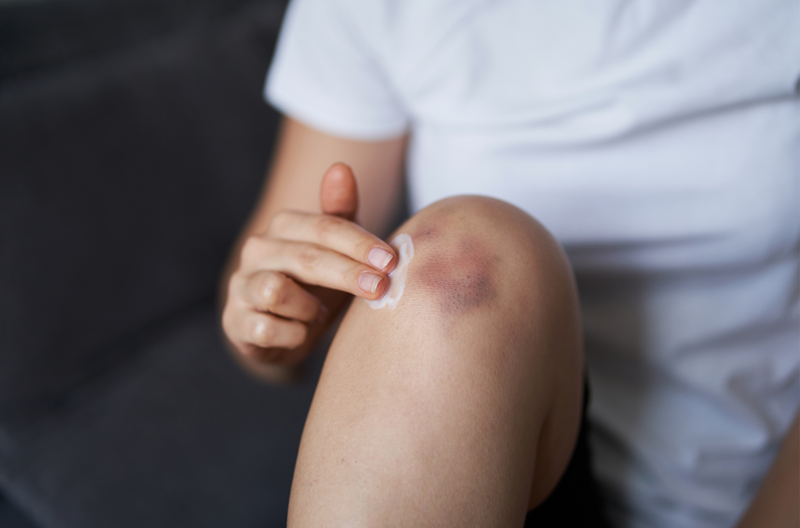
Aescin is also used in the context of sports and physical activity. In a study by Wetzel et al. (18), gels containing 1% or 2% aescin, together with diethylaminosalicylate and heparin, were applied to athletes with minor strains, sprains or bruises. When applied soon after injury and repeatedly over several hours, the gels relieved pain more quickly than a placebo. These findings indicate that dermally applied aescin may be useful in sport cosmetics for reducing discomfort, soothing tired muscles and improving the appearance and feel of the skin after physical activity.
Aescin as a surfactant
Aescin can be used as a surfactant or co-emulsifier in cosmetic formulations. In a study by Dargel et al., the temperature-dependent micelle formation and micellar structure of aescin were investigated (11). For micelle formation to occur, the critical micelle concentration must be reached. The authors found that the critical micelle concentration of aescin was not temperature dependent. However, the structure of the micelles varied with temperature: at 10 °C, the micelles exhibited a rod-like structure, while at a higher temperature (23 °C) they adopted a more symmetric, ellipsoidal shape.
CONTENT AND SAFETY OF DERMALLY APPLIED AESCIN
For dermal administration, gels containing 1% or 2% aescin are commonly used. In clinical studies, good or excellent tolerability was reported in more than 85% of patients (18, 19). Reported side effects included hypersensitivity reactions such as itching and erythema (10).
CONCLUSION
Horse chestnut seed extract and its main active compound, β‑aescin, are well-known for their vascular-supporting properties. While clinical studies have primarily focused on therapeutic applications, aescin also shows promise for use in cosmetic formulations. Its potential benefits include reducing puffiness and swelling, alleviating the feeling of tired or heavy legs, improving skin tone and providing natural emulsifying properties in cosmetic formulations. However, further studies are needed to confirm these effects.
Laura Činč Ćurić, M. Pharm.
University of Maribor, Faculty of Medicine, Maribor, Slovenia
laura.cinc@um.si

References
Please click on the references below for more information.
Leave a Reply